
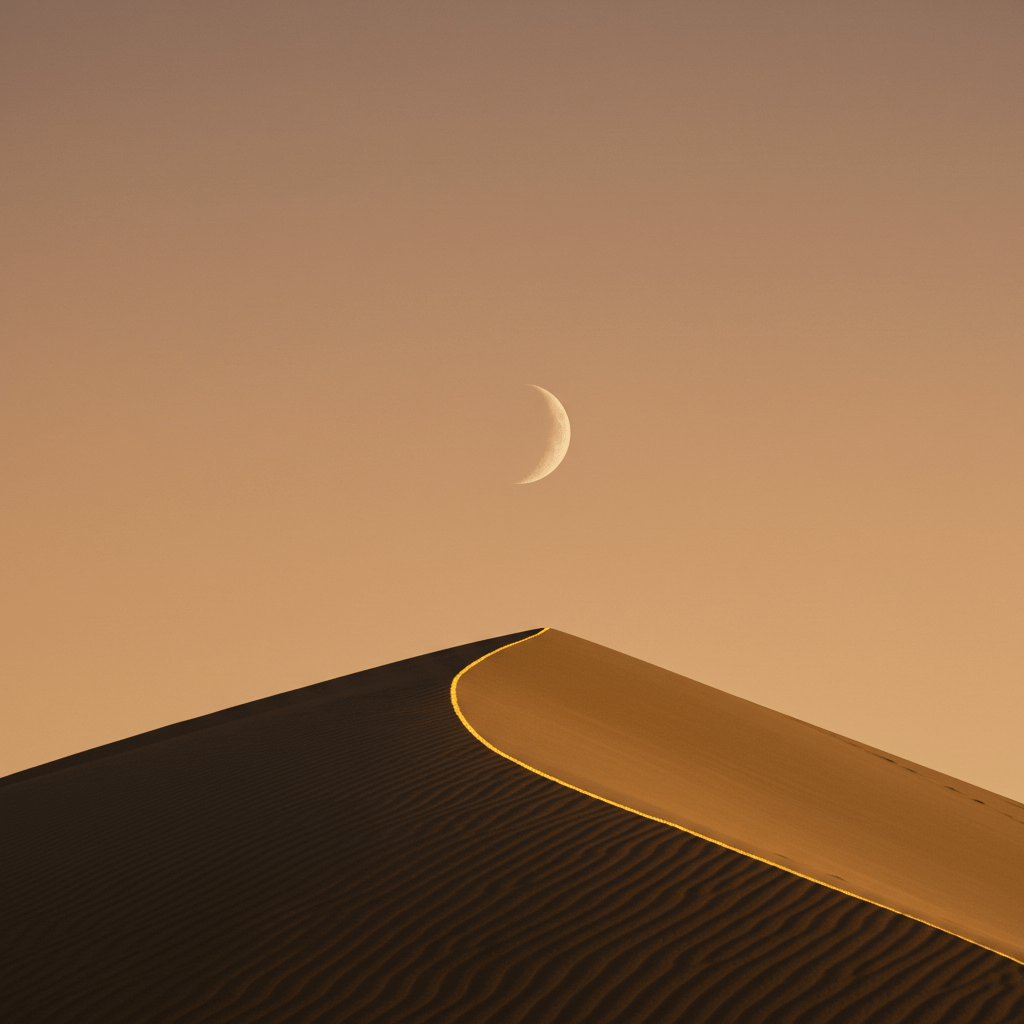
As the new Hijrah year softly unfolds, we are invited to pause and reflect on one of the most defining chapters in Islamic history: the Hijrah; the migration of the Prophet Muhammad ﷺ from Makkah to Madinah. It was not merely a change of city or climate. It was a story of courage, trust, sacrifice, and the unwavering certainty that Allah’s help is near, even when the night feels endlessly long.
The month of Muharram greets us with its sacred air, reminding us that this calendar was not built on conquests or worldly victories, but on migration for the sake of faith. The Hijrah wasn’t about fleeing; it was about transforming pain into hope, about leaving behind everything familiar; homes, families, wealth for something far greater: the freedom to worship Allah openly.
Close your eyes for a moment and picture that night: The streets of Makkah were heavy with tension. Quraysh had gathered, determined to extinguish the light of Islam by ending the life of the Prophet ﷺ. But in the quiet of that night, the Prophet ﷺ entrusted his life to Allah and left, accompanied by his closest companion, Abu Bakr رضي الله عنه.
They hid in the cave of Thawr, while the enemy circled nearby, swords drawn and hearts burning with hatred. It was in that moment of fear and uncertainty that Abu Bakr showed his worry, afraid for the life of the Prophet ﷺ. The response of the Messenger ﷺ was calm and steady, a lesson that still softens our hearts today.
He said: لَا تَحۡزَنۡ إِنَّ ٱللَّهَ مَعَنَاۖ, “Do not grieve; indeed Allāh is with us.” (At-Taubah 9:40)
Muharram also carries the memory of another miraculous deliverance, the story of Musa عليه السلام and the Children of Israel, who were rescued from Pharaoh’s tyranny. The Prophet ﷺ honored this victory by fasting on the Day of Ashura and encouraged us to do the same.
He said: “Fasting on the day of Ashura expiates the sins of the previous year.” (Sahih Muslim)
This act links our hearts across centuries, tying our struggles to theirs, and showing us that Allah grants victory after hardship and forgiveness after sincere effort.
But beyond the rituals and historical facts lies a personal lesson for each of us. The Hijrah wasn’t just an event; it was a turning point. It was the moment when a persecuted community became a united Ummah. It was when strangers became brothers, and when the seeds of mercy, justice, and unity were firmly planted.
It calls us to ask ourselves: What is my Hijrah today? What comfort do I need to leave behind to draw closer to Allah? What habits must I migrate from to live a life of sincerity and purpose?
The Prophet ﷺ said: “A Muslim is the one from whose tongue and hand the people are safe; and the Muhajir (the one who performs Hijrah) is he who abandons what Allah has forbidden.” (Sahih al-Bukhari)
Hijrah today might not involve deserts or camels or long physical journeys. It may not require us to cross scorching sands or leave behind homes built with our hands. Instead, it could be the quiet, unseen migration within the heart far more difficult than packing one’s belongings or boarding a caravan. It may be the slow, patient migration from envy to contentment, letting go of the constant comparison and longing for what others possess, and instead resting in gratitude for Allah’s blessings; or the struggle of moving from arrogance to humility, peeling away layers of pride, lowering the heart, and realizing that everything we have is simply a trust from the One who gives and takes as He wills.
Or it could be the migration from heedlessness to remembrance, from hearts distracted by worldly noise, to hearts softened by the remembrance of Allah, seeking Him in quiet moments before dawn, in whispered supplications, in tears shed in longing; or the most personal migration of all: from sin to repentance. A journey that requires honesty with oneself, courage to face one’s mistakes, and a return to the door of the Most Merciful, knowing that He never turns away a heart that seeks Him sincerely.
These migrations often go unnoticed by others. No one may see the inner battles fought in the silence of the night, or the temptations resisted, or the ego tamed but they are some of the heaviest and most noble journeys in the sight of Allah. Muharram, being among the four sacred months, reminds us that some days weigh heavier on the scales than others. This month calls us to pause and reflect on our lives, to reconcile with others and with ourselves, and to renew our intentions as we stand at the threshold of a new year.
Let us carry the lessons of Hijrah not as distant stories locked away in history books, but as living guidance for our daily struggles; let’s remember that every hardship we endure contains the seeds of ease, that every sincere migration toward Allah is a doorway to healing and growth, and that every sacrifice we make for the sake of our faith brings us nearer to the boundless mercy of our Lord. إِنَّ مَعَ ٱلۡعُسۡرِ يُسۡرࣰا
Indeed, with hardship [will be] ease. (Ash-Sharh 94:6).
This sacred time is an open invitation: a call to start again, to migrate toward what pleases Allah, to leave behind what weighs down the soul, and to trust, with full certainty, that wherever Allah is remembered, hope will always take root, no matter how barren the heart may feel.
May this Muharram fill our hearts with sincerity, inner strength, and a renewed longing for Allah’s nearness, a longing that shapes our every step and softens our every word.
Āmīn.

Stay Connected
Join our community for updates, tips, and support.
Follow us on our social media platforms