
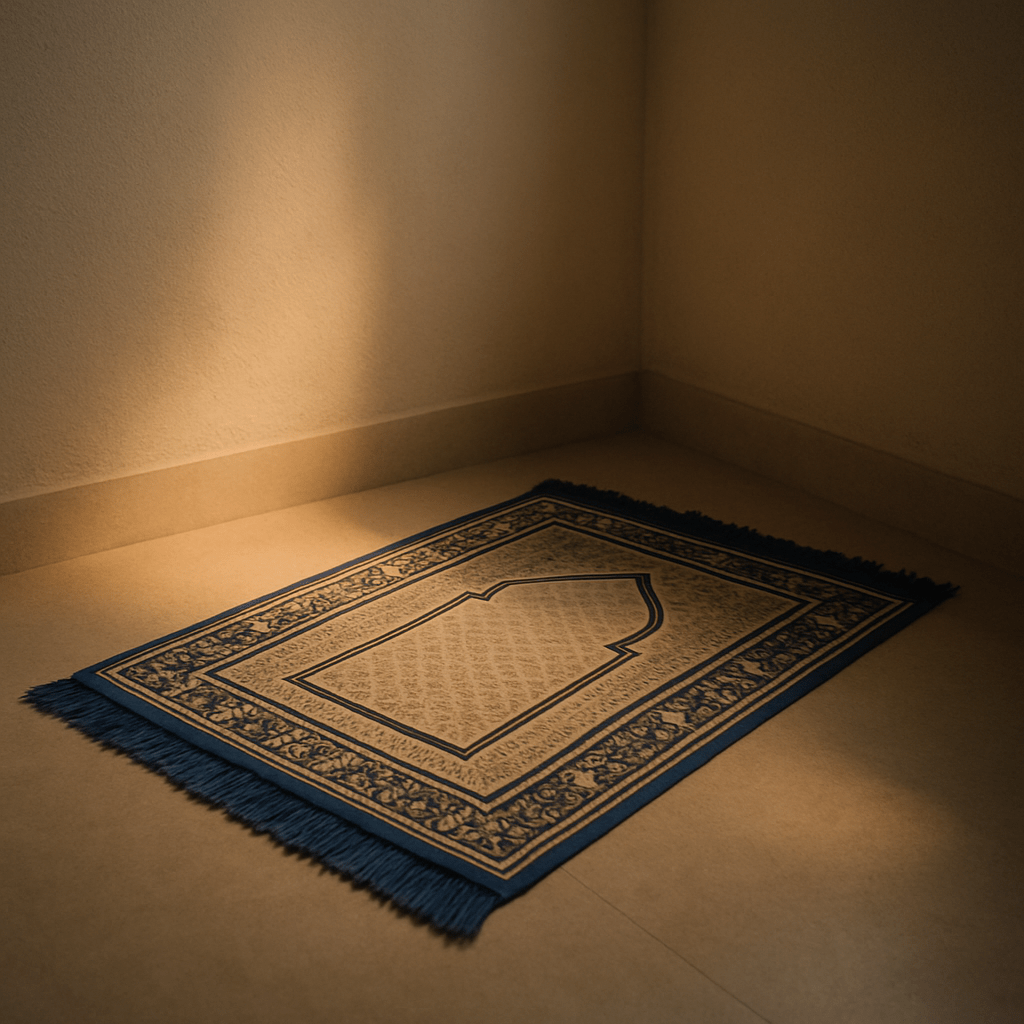
Now that you’re up (Alhamdulillāh!), what do you actually do with those precious hours?
1. Acts of ‘Ibādāt
Adhkār after waking up: Immediately you wake up, recite your Adhkār after waking up. Do not check your phone immediately you wake up (for at least an hour). Doing that first thing in the morning messes with your body’s natural waking-up process. Scrolling through social media or notifications releases dopamine, so it’s hard to stop once you start. Honestly, it’s such an easy way to waste the first hour of your day, and it kind of sets the tone for the rest of it.
Tahajjud prayer: This is a very effective way to get your prayers answered and also get lots of rewards from your Lord.
Du’ā, Istigfār, and reflection: These hours are when your supplications are closest to being answered. Sit quietly, make lots of Istigfār, pour your heart out to Allāh, and reflect on His blessings.
Fajr: A morning without Fajr prayer? Audhubillāh! Observe the two Nawafil before Fajr, then observe your first prayer of the day. Do not skip the two Rak’ahs before the Fajr prayer. Aishah (May Allah be pleased with her) reported:
The Prophet (ﷺ) said, “The two Rak’ah before the dawn (Fajr) prayer are better than this world and all it contains.”[Muslim]
Morning Adhkār: This is very important. Never skip it. Recite the prescribed morning supplications by our Prophet (ﷺ) immediately after doing your Dhikr after Fajr prayer. Get yourself a book that has the recommended and prescribed authentic Adhkar by the Prophet (ﷺ).
Hifdh: Memorizing a new portion of the Qur’ān as a student of knowledge should be an essential activity of your early morning. It’s easier to memorize when the brain is very active.
Tilāwah: Make this an obligation in the morning. Recite, reflect, and ponder upon the Tafsīr of the Qur’ān.
Murajā’a: Reviewing your previously memorized portion is best during the early morning hours. Your brain is very fresh and active and you’re most alert.
2. Mental Clarity and Planning
Journaling or planning: Write down your goals, to-do lists, or thoughts. The quiet helps you organize your mind before the chaos of the day begins.
Learning or reading: Whether it’s an article, a book, or studying something new, your brain is alert and ready to absorb information in the early hours.
3. Physical Well-Being
Light exercise: Gentle movement wakes your body, boosts blood flow, and improves energy.
Hydrate and nourish: Drink water to rehydrate and, if you eat early, a healthy breakfast fuels your body for the day.
Body care: Take a few minutes for personal hygiene, skincare, or simply refreshing yourself. It helps you feel awake, confident, and ready for the day.
4. Simple Acts
Also, simply being present, sitting quietly, sipping tea, or just watching the sunrise is a fulfilling thing to do in the morning. It can boost your emotions and give you a sense of gratitude and energy to start your day.
In summary, dear sister in Islam, waking up early isn’t always easy, but Wallāh, it’s worth it. Those quiet hours hold Bārakah: a few rak’ahs of Tahajjud, sincere Du’ā, or a few minutes of Tilāwah can nourish your soul, calm your mind, and energize your body. Science agrees, too: early mornings improve focus, mood, and overall well-being.
Start small, be consistent, and gradually you’ll find that these hours become your favorite part of the day, and you find yourself becoming more productive with your days filled with Bārakah, bi Idhnillāh.
May Allāh grant us the sweetness and Bārakah of the early morning. Āmīn.

Sakeenah Basheer is a student who loves sharing practical tips, reflections, and personal experiences to help sisters live a purposeful and blessed life, one day at a time.
Stay Connected
Join our community for updates, tips, and support.
Follow us on our social media platforms